Need home furnace repair in Annapolis?
- Compare estimates from local providers
- Help for AC and furnace problems
- Plain answers, no obligation
- Simple request form
No obligation
Request an estimate today
A furnace that quits in Annapolis is more than a nuisance. Winters here bring nor'easters and freeze-thaw cycles, and a cold house gets uncomfortable fast. Pipes in basements can suffer too. You need answers in plain words.
Harmpiano Heating & Air is a referral service. We do not fix furnaces. We connect you with independent providers in our network who do. You can request an estimate, read what each provider offers, and compare them side by side. Then you decide at your own pace, with no obligation. Whether you live in a colonial, a split-level, or an older rowhouse, the goal is the same: a warm home and a choice you feel good about. Compare, then decide.
A gas smell is like rotten eggs. If you notice it, leave the house right away. Do not touch light switches. Do not use a lighter or a phone inside. Contact the gas company or emergency services from outside.
Carbon monoxide (CO) is a gas you cannot see or smell. A faulty furnace can leak it. Headaches, dizziness, and an alarm that sounds are red flags. Get fresh air first. Then get help. Test your CO alarm batteries each season.
Timing matters with a broken furnace. Here is a rough picture.
The house cools slowly at first. This is a good moment to run simple checks and request estimates. Nothing is urgent yet, so you can think clearly.
Indoor air drops faster once the outside air turns bitter. Kids and older adults feel it first. Use blankets and close doors to rooms you do not need.
In a deep freeze, basement pipes can get cold enough to freeze. A frozen pipe can burst. Many providers can respond quickly, so if the house keeps getting colder, request a callback to check provider availability.
These take a few minutes. Stay safe, and stop if anything feels wrong.
Some signs show up before a full breakdown. Watch for these:
If you see one of these, request an estimate early. Small fixes cost less than big ones.
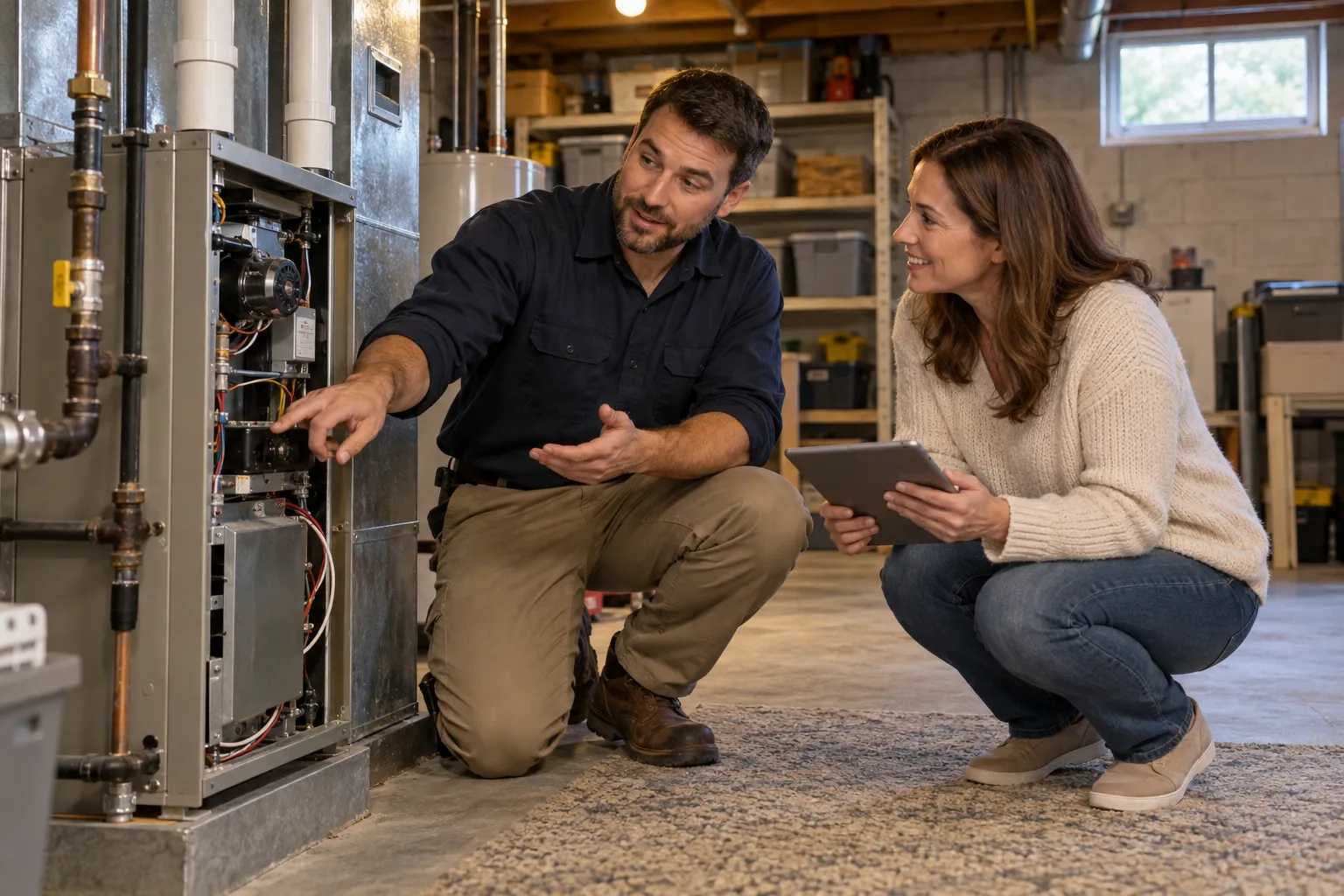
A provider usually starts by asking about the problem. Then they check the thermostat, filter, burners, and blower. The blower is the fan that pushes warm air through your ducts. They test safety controls too. After that, they explain what they found and give a written quote. You choose whether to go ahead.
The igniter lights the burner. The flame sensor tells the furnace the fire is on. When either one fails, the furnace shuts off. These are among the more common fixes.
If the fan will not spin, no warm air moves. Worn belts, bad capacitors, or a tired motor can be the cause.
Sometimes the furnace is fine. The control on your wall is not. A new or reset thermostat may solve it.
The heat exchanger is the metal part that warms the air. A crack is serious because it can leak CO. Providers often advise replacing the furnace in this case.
This is the big question. Here are simple points to weigh.
If you search for furnace replacement near me, ask each provider to price both paths. Then you can compare heating and cooling options side by side.
Ask these before you say yes to any HVAC service:
Put two or three quotes next to each other. Look at the scope, the parts, and the timing. The smallest number is not always the right fit, so read the details. Take the time you need. No pressure, ever.
Colonials, split-levels, and rowhouses often have long duct runs or tight basement spaces. Ask the provider how they will handle your layout.
A provider inspects burners, vents, and controls so you know the furnace is running safely.
You get a plain explanation of what failed and why.
Providers put the scope and price on paper before you decide.
Ask about fixing the part, replacing the unit, or both, so you can compare real choices.
These are typical U.S. ranges. Your price depends on your furnace, your home, and the part that failed. Always ask for a written quote before work starts.
| Item | Typical range | Notes |
|---|---|---|
| Diagnostic visit | $75 – $200 | Some providers apply it to the repair |
| Igniter or flame sensor | $150 – $450 | Common, quick fix |
| Thermostat repair or swap | $100 – $500 | Smart models cost more |
| Blower motor | $400 – $1,500 | Varies by motor type |
| Heat exchanger repair | $1,500 – $3,500 | Often replaced instead |
| New furnace, installed | $3,800 – $10,000 | Size and efficiency change the price |
Tell us what your furnace is doing and where you live. It takes a minute.
Harmpiano Heating & Air connects you with independent providers in our network near you.
Review scope, price, and timing side by side.
Pick a provider, or walk away. The choice is yours.
See estimates from independent providers side by side, then pick the one that fits you.
Trade terms get a quick, simple definition, so nothing sounds confusing.
Asking for an estimate does not lock you into any provider.
Providers in our network know area homes, weather, and basements.
Common causes are a dirty filter, a thermostat set wrong, a failed igniter, or a blower problem. Check the filter and thermostat first. If heat is still weak, request an estimate from a provider.
Many repairs run from about $150 to $1,500, depending on the part. Bigger jobs cost more. Get a written quote and compare more than one.
It depends on age, repair cost, and safety. A furnace over 15 years old with a costly fix may be worth replacing. Ask providers to price both.
Tell us what your AC or furnace is doing. We pass your request to independent local providers in our network. You compare and decide, with no obligation.
No obligation